Belgium experienced a day of horror last March. What was so feared happened, mowing down lives, mutilating others, shocking countless. Here and elsewhere. A few weeks after these attacks, we can truly speak of a societal trauma that is all the more acute since it is not the result of an accident or a natural disaster but indeed of voluntary acts of rare violence interpersonal. What are the symptoms left by such traumatic events? How to cure them? How can we support loved ones and colleagues who have experienced them?
Today, it is not only the direct victims, those who were at the scene of the attacks, who are still plagued by physical and mental suffering, but society as a whole. The unusual scale of these dramatic events multiplies the number of indirect victims, generally limited to the family and friends of those involved. Among these indirect victims, there are obviously the many people who were stranded in business on Tuesday, March 22, those who were evacuated, had difficulty returning home or to pick up their children. But we also find all those affected by the hype that followed, even though they were not involved in the chaos of this tragic day.
Trauma from interpersonal violence is unique in that it attacks the bonds between individuals. Mistrust and suspicion set in. Many avoid public places. Travel by public transport is feared. We note the development of many amalgams, including in the workplace where colleagues who have been appreciated until now are now the object of distrust or even rejection based on their cultural background. In addition to the usual symptoms of trauma, there is also a deterioration in social relations which is detrimental to the functioning of society as a whole.
Stress, trauma, trauma and post-traumatic stress
Faced with a potentially traumatic event, humans can develop different reactions, which differ depending on the nature of the event, the degree of proximity to it, but also on the personality and experience of the victim.
The most obvious and well-known reaction is obviously that of stress, described as a standard physiological reaction of alarm and defense of the organism in the face of aggression. For ordinary people, a situation is effectively stressful only if it is perceived as such. Individuals subjected to more or less acute stress will put in place adaptation strategies (cognitive or behavioral) to deal with it.
We very often describe stress in positive or negative terms although today, the tendency is to reserve the word “stress” for negative aspects and to replace the notion of “positive stress” by the more appropriate terms of “mobilization “Or” motivation “. 1
The “trauma” directly echoes the psychoanalytic approach initiated by Sigmund Freud. It means a burglary injury while “trauma” is reserved for consequences on the whole body.
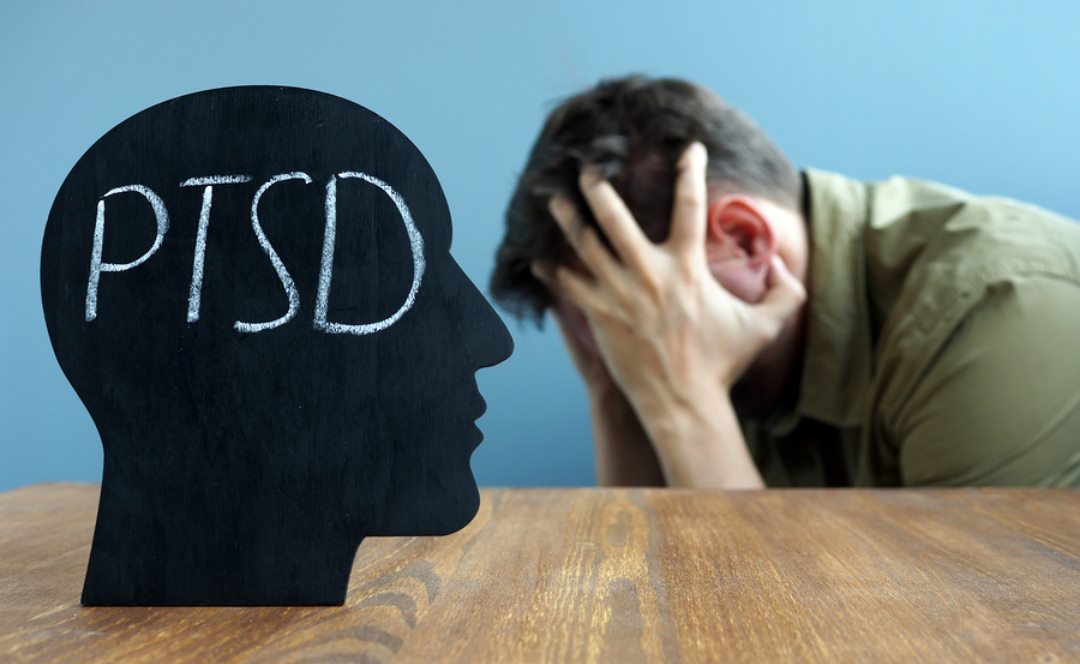
The trauma produces an irreparable psychic break-in. It exposes the victim to the appearance of a traumatic repetition syndrome: an initial event is, in the aftermath, rewritten and rewritten in the person’s life in the light of the present. The person lives in a permanent state of alert in front of an internal danger of the order of the horror which is repeated in an intrusive and tireless manner in the nightmares and the reminiscences. “When I arrived at the workshop, I discovered my direct colleague, Marc, who had hanged himself, says Paul. Since then, I have been haunted by the image of her purplish face. At any time, day or night, this image imposes itself on my mind and causes the same fear as the day of the discovery of the body. The situation is even more painful at night. Paul no longer dares to turn off the lights and he keeps pushing back the time for bedtime for fear of waking up anxious and terrified. Worse still: instead of diminishing, these flashbacks are now triggered at the slightest siren reminding him of the arrival of help at the scene of the tragedy. Paul is exhausted and he sinks into depression. He is now unable to return to work.
In a stressful situation, the victim therefore faces the threat by mobilizing his defensive resources. On the other hand, in the event of trauma, like that experienced by Paul, an image of the real of death will break into the psychic apparatus and become embedded in it like a “foreign body”.
As for post-traumatic stress syndrome, which is much talked about today following the various attacks that hit Paris and Brussels, it is defined as a severe anxiety disorder that appears following a traumatic event, which eventually exposed the individual to death. Direct victims of the event or witnesses to a disaster are most often affected. As main symptoms, we find insomnia, nightmares, irritability, isolation, anger, fear, sometimes violence or addictions (alcoholism …) and depression. In some people, post-traumatic stress can lead to more disabling disorders such as avoidance (avoiding crowds, public transport, etc.).
Another condition that may appear in victims or witnesses is “survivor syndrome”: they develop guilt because they are alive and others have perished at the scene of the disaster.
Following a traumatic event, symptoms may appear for several days, weeks, or even months. We speak in the latter case of chronic post-traumatic stress.
After the attacks of March 22, it is certain that there are still today victims subject to a state of post-traumatic stress. Most are obviously the direct victims (wounded, witnesses, families of the victims, etc.). Others, far more numerous, live in a state of psychological trauma. Sometimes ignoring it.
How to identify a traumatized relative or colleague?
Certain behaviors and attitudes are indicative of a potential state of mental trauma. The following symptoms should, at this point, just a few months after the event, arouse your attention.
First of all, physically: the person reports sleep disturbances, fatigue or even exhaustion. She has exaggerated startle reactions, increased needs for alcohol, tobacco, coffee or other substances.
Intellectually then: your acquaintance complains of the presence of flashbacks, she has memory problems, is unusually inattentive and absent-minded, has “absences”, commits unusual errors in her work.
Finally, emotionally, the person tends to isolate himself, to withdraw from certain tasks or missions. She may become discouraged, show anger or resentment. It expresses a feeling of insecurity and emotional dullness.
These reactions are normal after a critical event, but they are unquestionably unpleasant. They can affect individuals in different ways depending on their personality and their experience. It is often important to know that people who have been assaulted in the past (which you may not have been aware of) are generally much more affected by current events.
These natural reactions can remain stable at first and decrease in the weeks that follow. This will be the case for the majority of the victims. However, there is a risk that these reactions will increase and occur more and more often. Consequences can then appear at the level of family and professional relationships. Appropriate care and a rest period may then be necessary.
What can you do to support a traumatized relative or colleague?
You don’t have to be a mental health professional to make yourself useful by showing humanity. Do not rush to directly delegate your support to professional help. Your sincere involvement will have a great impact. Show yourself to be human, close, and authentic, and use the tips below.
Don’t wait for help, offer it!
Take both the event that caused the trauma and the reactions it caused seriously. Do not minimize.
Let emotions and questions express without judging and without forcing them to be expressed.
Spend your time and listening to the person.
Offer your help with concrete tasks and material questions.
Be tolerant and patient.
Ask for help if you feel overwhelmed by the situation or have questions. Your sincere interest will be appreciated, but also recognize your limits by offering professional psychological support.
How to get out of the trauma?
First of all, we are convinced that by expressing our emotions, we release the energy accumulated in the body during the emotional experience and, with it, the impact of memories. Conversely, not expressing your emotions could create risks for the health of the individual. This is the model of the tank and the kettle: our emotions build up the pressure until the lid jumps off and the steam escapes in the form of tears, rage or cries. Closing the valves can cause the kettle to explode.
For psychosocial workers, the liberating virtues of the verbal expression of emotion have been abandoned and the challenge lies in the fact of gradually integrating traumatic memories into ordinary memories. To recreate meaning around what has none, and to integrate this “foreign body” with the rest of the psyche.
 Healthcare Guide