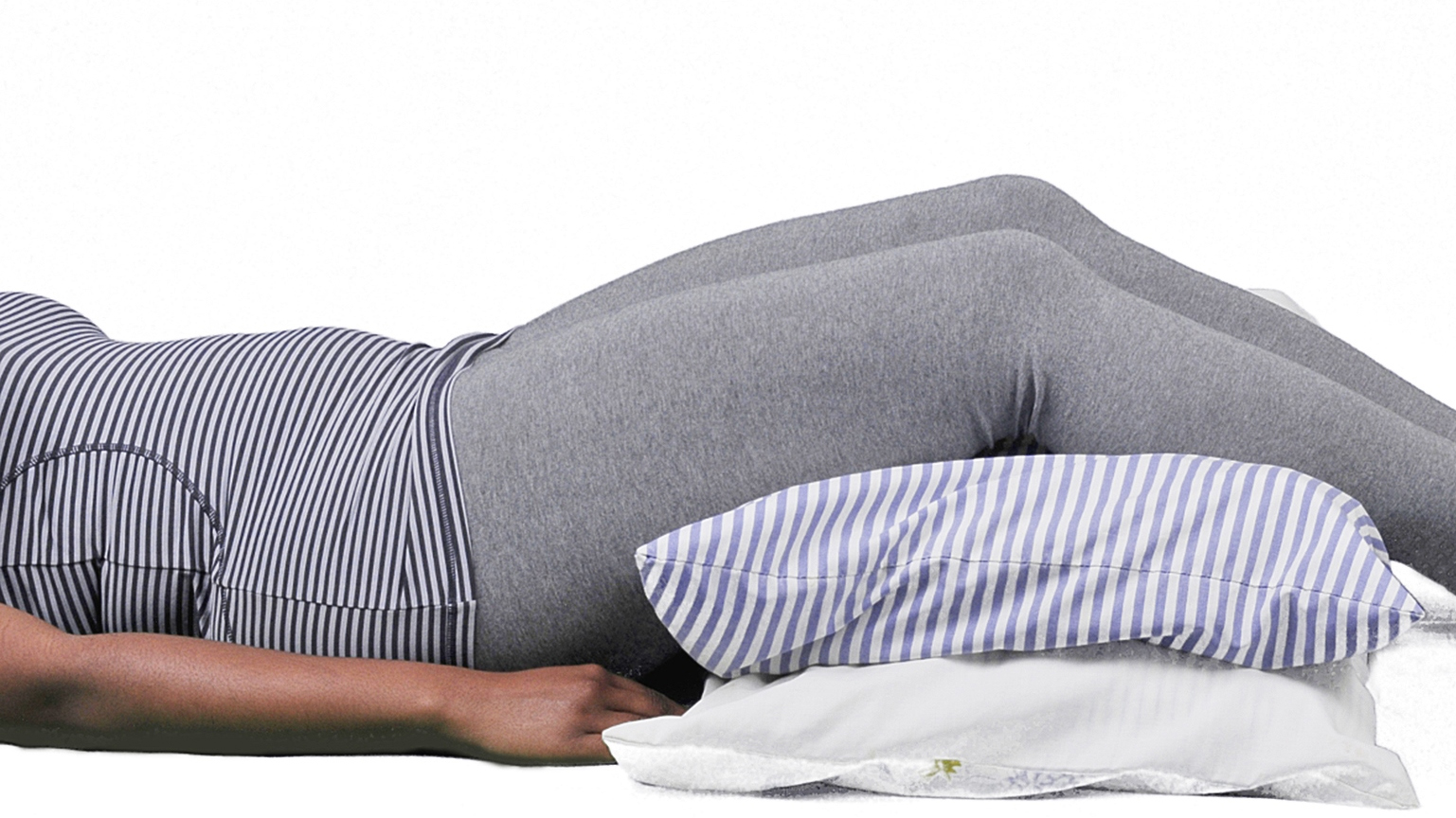
Lumbago, which is usually characterized by lower back pain, affects not only your daily life, but can also affect your sleep. A bad sleep position could cause or even worsen your pain, which is why today we are going to find out which are the best sleep positions if you have low back pain.
Sleeping with a lumbago can quickly turn into an ordeal
Having a low back pain can prevent you from getting a good night’s sleep, but if you don’t get a good sleep position, it could also make your pain worse. A poor sleep position could even be the underlying cause of your pain. Indeed, certain positions can exert unnecessary pressure on the neck, hips, pelvis, back…
The most important thing to prevent pain and above all to keep the natural curve of your spine. One sure way to make sure of this is to have your head, shoulders and hips properly supported and the best position for proper alignment and generally on your back.
However, many people do not feel comfortable sleeping on their backs, and in other cases this position may not be recommended in cases of sleep apnea for example. Everyone sleeps differently, but depending on where you are, there are a few tips you can learn to help reduce and prevent back pain.
So, if you suffer from lumbago or other back pain, try the following sleep positions that will help relieve and prevent your pain to give you a good, restful sleep.
Sleep on your back with a pillow under your knees
Sleeping on your back is generally considered the best sleeping position to take care of your spine and avoid back pain. This position distributes your weight evenly and also minimizes pressure points while ensuring proper alignment of your head, neck and spine.
Placing a pillow under your knees will provide you with additional support and maintain the natural curve of your spine. To really have an optimal position, lie on your back, facing the ceiling, avoiding twisting your head.
Place a pillow to support your head and neck and place a pillow under your knees for better support and alignment. Possibly, if you suffer from severe pain, placing a small pillow under your back could also relieve you.
Sleep on your side with a pillow between your knees
Sleeping on your side and the most popular position and considered by many people to be the most comfortable, but this does not necessarily offer the best alignment of the spine and can quickly tire your back.
However, no worries, this can easily be fixed. If you sleep on your side, you can simply place a pillow between your knees.
This lifts your upper leg, which restores the natural alignment of the hips, pelvis, and spine. This position with a pillow is also the preferred position for many pregnant women and, for optimal support, you can also place a pillow at your waist.
Sleep in a fetal position
The fetal position is particularly recommended for people suffering from a herniated disc. This position provides effective relief, which is mainly due to the fact that lying on your side with your knees bent reduces the bending of the spine and helps to relax the joints.
Sleep-fetal-position
This position can also be very effective if you suffer from lumbago but, if you sleep in the fetal position, still take care to keep your back straight and, in this position also, you can possibly place a pillow between your legs.
Sleep on your stomach with a pillow under your stomach
Of all the sleep positions you can imagine, sleeping on your stomach is generally considered to be the worst position possible. However, for those who have trouble sleeping in another position, you can place a small pillow under your belly and at your hips, which can help you improve the alignment of your spine.
This position can also relieve you if you suffer from a herniated disc but, if you sleep on your stomach, it is better to use a flat pillow, even not even a pillow, where you could suffer from pain in the area neck and cervical when you wake up.
Our opinion to sleep better with lumbago
So, if you suffer from lumbago, the best is still to sleep on your back, which will offer you a perfect alignment to reduce and prevent your pain. However, if you prefer another position, these few tips should help you keep a good alignment to enjoy a good restful and painless night’s sleep.
 Healthcare Guide